


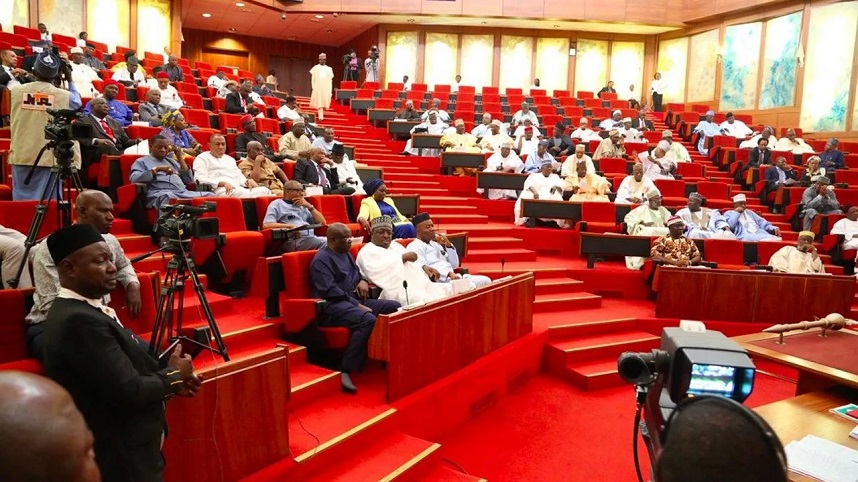
Senate pushes for total ban on textile imports to resuscitate local industry in Nigeria
The Nigerian Senate has called on the executive arm of government to place a comprehensive ban on the importation of all textile materials into Nigeria.
The upper legislative chamber argued that the drastic measure is now critical to resuscitating the nation’s once-vibrant textile sector, which currently sees Nigeria relying on foreign goods to meet over 90 percent of local demand.
The resolution followed a motion titled “The Need to Revive the Textile Industry in Nigeria,” sponsored by Senator Sunday Marshall Katung (Kaduna South) and co-sponsored by nine other lawmakers.
While presenting the motion, Senator Katung took a nostalgic look back at the historical significance of the sector, particularly along the Kaduna–Kano industrial corridor. He recalled that Nigeria’s journey into industrial textile manufacturing began in Kaduna in 1957, sparking a booming era that generated massive employment.
READ ALSO: KANO 2027: Kwankwaso names Gwarzo for gov ticket, Gawuna for Senate
However, the lawmaker lamented that inconsistent government policies, poor infrastructure, and a lack of investment triggered a steady, painful decline.
“By 1997, many of these companies were barely functional, grappling with obsolete machinery and erratic electricity supply,” Katung stated. “By 2007, most had shut down entirely, leaving over 70,000 workers unemployed and industrial facilities abandoned.”
WTO rules blamed for sector’s collapse
Contributing to the debate, lawmakers expressed deep concern over how a country that once clothed West Africa became a net importer of fabrics.
Senator Adamu Aliero advocated for an uncompromising approach, insisting on an outright ban on textile imports. He warned that any government revival policy lacking a strict enforcement ban is dead on arrival.
Senator Adams Oshiomhole pointed fingers at historical policy missteps, arguing that the local textile sector fell victim to poorly thought-out, military-era decisions. He noted that Nigeria hastily submitted to the World Trade Organisation (WTO) regulations without putting proper local safeguards in place. Oshiomhole added that even global economic powers like the United States frequently bypass certain WTO rules to negotiate bilateral trade deals that protect their domestic interests.
The Senate’s directives to the executive
Following extensive deliberations, the Senate adopted a multi-pronged resolution aimed at restoring the sector’s lost glory.
It urged the government to implement a total ban on foreign textile materials to shield local manufacturers from unfair competition.
It asked the Nigeria Customs Service (NCS) to immediately strengthen surveillance across all borders to aggressively curb smuggling and ensure strict tariff collection where applicable.
It demanded that the federal ministries of agriculture, and industry, trade and investment must take urgent, coordinated steps to rejuvenate textile production nationwide, with a special focus on historical industrial hubs like Kaduna and Kano. Lawmakers highlighted cotton farming as the fastest catalyst for the industry’s rebirth.
