


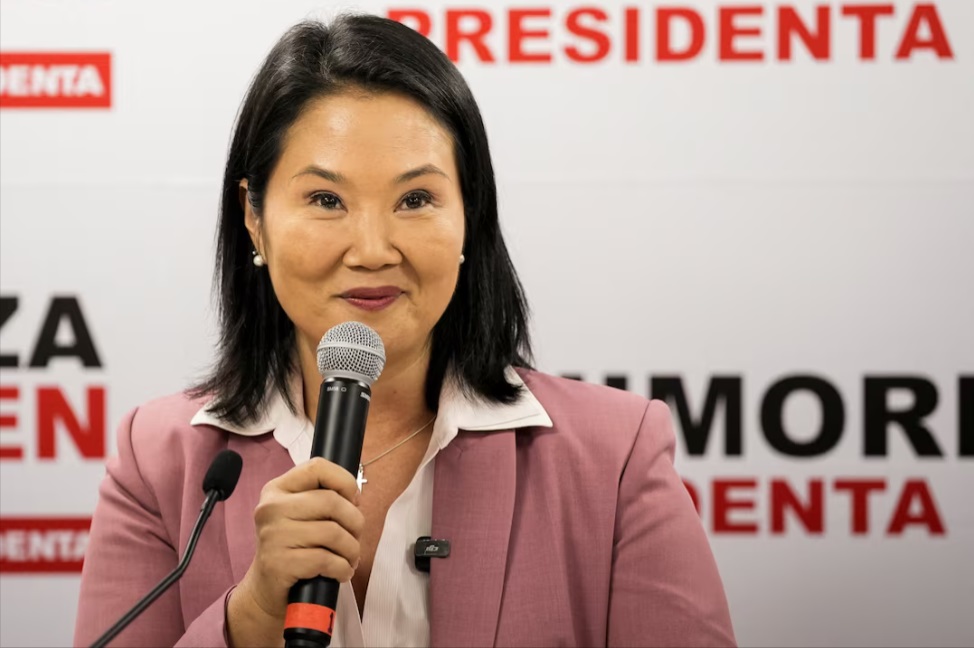
PERU DECIDES: Conservative Keiko Fujimori declared presidential winner after weeks of tension
Following weeks of intense protests, widespread allegations of fraud, and a painstaking review of contested ballots, conservative candidate Keiko Fujimori has officially been declared the winner of Peru’s highly polarized presidential race.
The country’s electoral office confirmed the victory on Friday, bringing an end to a razor-thin contest that has kept the South American nation on edge.
Historic victory on the fourth attempt
Fujimori, 51, secured the nation’s top office on her fourth presidential run, clinching 50.135% of the vote in the June 7 runoff election. She narrowly defeated her rival, leftist congressman Roberto Sanchez, who garnered 49.865% of the total votes.
The historical victory was decided by a mere 50,000 votes out of the 18 million ballots cast across the country.
Speaking at her party’s headquarters alongside enthusiastic staff, the President-elect promised continuity and institutional reform.
READ ALSO: STRAIT OF HORMUZ: UN evacuates 2,500 seafarers; attacks freeze vital rescue operation
“We’re going to identify all the best practices, initiatives, and projects that have yielded results so that they can continue. Today marks the beginning of a new era for Peru—an era of responsibility, dialogue, and results to restore confidence in our institutions,” Fujimori stated.
The incredibly slim margin represents a dramatic reversal of fortune for Fujimori. In the 2021 presidential election, she suffered a heartbreakingly narrow loss by just 45,000 votes to former leftist President Pedro Castillo. Castillo was subsequently impeached and imprisoned in 2022 after attempting to illegally dissolve the Peruvian Congress.
Opposition rejects outcome
The election results have exposed deep geopolitical and social divides within Peru. Roberto Sanchez, widely regarded as the political heir to the jailed Castillo, has flatly refused to recognize Fujimori’s upcoming government. Sanchez has leveled allegations of electoral fraud, though he has not yet provided concrete evidence to back the claims.
Boosted heavily by voters in Peru’s vast rural regions, Sanchez led the race early during the preliminary ballot count and actually won the domestic vote by a small margin. In protest of the final declaration, Sanchez has led street marches and filed an official complaint with the Inter-American Commission on Human Rights to challenge the legitimacy of the process.
Conversely, Fujimori’s path to victory was paved by overwhelming support in the capital region of Lima and a decisive dominance in the overseas diaspora vote, which ultimately pushed her over the finish line.
Global leaders react as markets rally
Fujimori is scheduled to officially assume power on July 28. In a stark reflection of Peru’s ongoing political volatility, she will become the country’s 10th president since 2016. She will take over the reins from interim President Jose Balcazar, who stepped in this past February following a turbulent wave of presidential dismissals triggered by corruption and abuse-of-power scandals.
Her triumph solidifies a broader rightward political shift across Latin America. Several conservative regional leaders, including Argentina’s Javier Milei, El Salvador’s Nayib Bukele, and Chile’s Jose Antonio Kast, have already extended their congratulations.
International validation also came from Washington. U.S. Secretary of State Marco Rubio congratulated Fujimori in a formal statement, noting that President Donald Trump’s administration looks forward to strengthening bilateral cooperation on security, trade, and investment.
Global financial markets also reacted positively to the news, having previously been rattled by the prospect of a leftist Sanchez administration. Credit rating agency Moody’s issued a report indicating that a Fujimori presidency is expected to preserve policy continuity and economic stability, bolster investor confidence, helping the country sustain its fiscal growth, as well as unlock delayed mining projects in Peru, which stands as the world’s third-largest producer of copper.
Divisive dynasty and fractured nation
Despite the economic optimism, Fujimori faces the daunting task of governing a deeply fractured nation. She carries the heavy legacy of a highly controversial political dynasty. She is the daughter of the late President Alberto Fujimori, who ruled Peru with an iron fist from 1990 to 2000—credited with crushing violent Maoist insurgents and stabilizing runaway hyperinflation, but widely condemned for authoritarian excesses. The older Fujimori eventually served 16 years in prison for severe human rights abuses.
Keiko Fujimori has faced her own legal battles, having spent significant time in jail under pre-trial detention between 2018 and 2020 during a sweeping campaign-finance investigation. Those allegations were officially dropped last year.
Going forward, the new president will have to navigate a highly fragmented Congress notorious for impeaching and ejecting sitting leaders. She must also bridge the intense economic chasm between wealthy Lima and the marginalized rural regions—areas that served as Sanchez’s stronghold and previously witnessed violent clashes that claimed over 60 lives following Castillo’s ousting.
While Fujimori’s party currently holds the largest single bloc of seats in Congress, Sanchez’s party, Together for Peru, controls the second-largest, setting the stage for a tense legislative showdown.
