


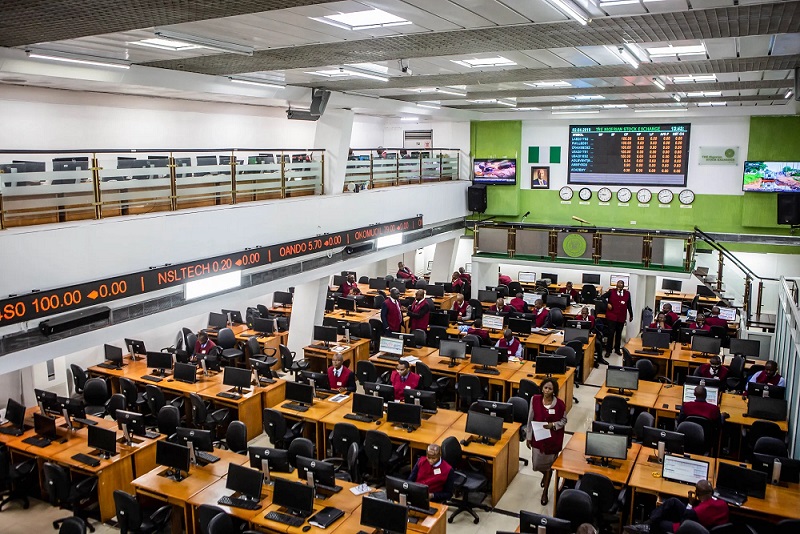
Foreign capital stumbles, as homegrown funds thrive in Nigeria’s faster equities market
The Nigerian capital market’s aggressive drive toward modernization has introduced an unexpected friction point for international asset managers.
Following the market’s rapid transition to shorter settlement cycles—moving down to a swift T+1 (Transaction plus One day) framework—foreign investors are facing unprecedented operational bottlenecks.
While local regulators and market operators view the shortened window as a landmark achievement designed to reduce counterparty risk and boost local liquidity, cross-border participants are struggling to adapt. The core issue lies in aligning global time-zone differences, trade confirmations, and foreign exchange (FX) conversions within the newly compressed 24-hour deadline.
The Tug-of-War: Local modernization vs. global reality
On June 1, 2026, Nigeria became the first capital market in Africa to implement the T+1 settlement cycle, migrating from the previous T+2 system. The move was widely praised by local bodies, including the Chartered Institute of Stockbrokers (CIS), as a bold step that aligns Nigeria with major global hubs like New York and London.
READ ALSO: CBN CRACKDOWN: Licences of Merchant MFB, 45 others revoked over regulatory failures
However, what works seamlessly for a domestic investor has introduced significant operational hurdles for foreign portfolio investors (FPIs).
The operational crunch
Under a T+1 framework, a trade executed today must be settled tomorrow. For an international institutional investor based in the US or UK, this requires coordinating trade matching, securing FX allocations from the Central Bank of Nigeria (CBN), and moving capital across time zones in a matter of hours.
Because of these tight turnarounds, global market participants warn that the system creates a de facto “pre-funding” environment. Foreign investors are increasingly forced to fund their equity trades with cash upfront before a transaction is even executed, simply to ensure they do not default on the T+1 deadline.
FTSE Russell pauses Nigeria’s upgrade
The operational friction has already triggered alarm bells internationally. FTSE Russell, the London-based global index provider, recently announced it has put Nigeria’s highly anticipated upgrade to “Frontier Market” status on hold.
Nigeria had spent 30 months out of the index due to historical FX liquidity challenges before earning a scheduled reclassification for September 2026. This upgrade is now under formal review, with FTSE Russell citing concerns over the settlement cycle’s impact on global institutional standards.
Investment analysts note that forcing international investors to pre-fund trades exposes them to greater currency volatility. “Confidence hasn’t risen enough for foreign managers to comfortably take that level of immediate currency risk,” an institutional analyst stated. “If they have to lock up dollar-to-naira capital ahead of time without a guaranteed transaction, it alters the risk math entirely.”
Market impact and the path forward
The stakes are incredibly high for the Nigerian Exchange (NGX). Data from the exchange shows that foreign capital inflow into Nigerian stocks dropped 17.4% to ₦400.1 billion in the year leading up to May 2026 compared to the same period in 2025. Market participants worry that if the FTSE Russell upgrade is reversed or delayed indefinitely, it could further dampen foreign inflows and limit the market’s international visibility.
Despite the pushback, local stakeholders maintain that the policy itself is sound but requires better supporting infrastructure. The CIS has emphasized that the transition does not legally alter the market’s standard Delivery versus Payment (DvP) model. Instead, the institute urges a collaborative fix smoother FX access, streamlining the process for foreign investors to convert and repatriate funds through the banking system; Straight-Through Processing (STP), enhancing technological infrastructure between local brokers, global custodians, and the clearinghouse to automate trade matching; and stakeholder engagement, actively working with international index providers to prove that the T+1 system can operate smoothly without structural disadvantages for overseas funds.
As the NGX balances its long-term vision of becoming a globally competitive, fast-settling financial hub, it must now race to resolve the operational bottlenecks keeping foreign capital on the sidelines.
