


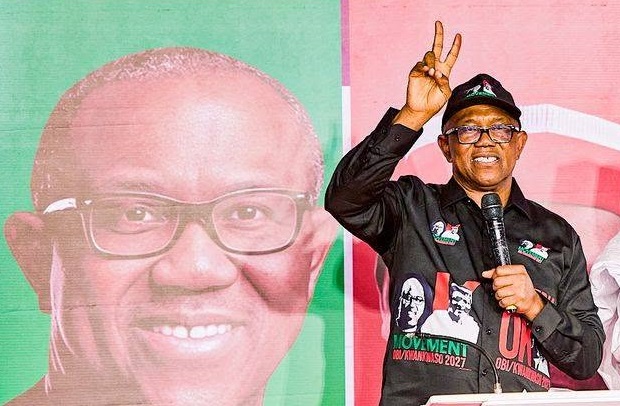
Peter Obi vows to negotiate with repentant bandits if elected Nigeria’s president
The presidential candidate of the Nigeria Democratic Congress (NDC), Peter Obi, has declared that his administration will adopt a carrot-and-stick approach to tackle Nigeria’s insecurity if elected in 2027. Obi stated that he is ready to dialogue with bandits and violent groups willing to surrender their arms, but vowed to deploy full military force against those who persist in criminality.
Obi disclosed this during a hard-hitting interview on BlackBox with Rufai Oseni, where he outlined his strategy for restoring security, national cohesion, and peace across the Federation.
‘Peace for peace, war for war’
The former Anambra State governor emphasized that achieving lasting peace requires giving individuals prepared to embrace reconciliation a second chance to contribute to nation-building.
“In uniting the country, anybody who wants peace, I will talk with him; I will negotiate with him. Anybody who wants war, we will go to war,” Obi stated bluntly.
He argued that Nigeria must establish clear pathways for the rehabilitation and reintegration of repentant criminals who demonstrate a genuine readiness to change. According to him, societies progress when they offer redemption rather than permanent condemnation.
READ ALSO: FOREIGN EXCHANGE REFORMS: Naira still undervalued by 25.6%, says IMF
To validate his point, Obi shared an anecdote from a visit to a tertiary institution in the United States, where former inmates rose to lead the academic community.
“I once visited a university in America where the entire faculty are people who came out of prison. From the dean to the registrar, professors spent years in prison for one offense or the other. So, if you say you want to change and be part of this new Nigeria we are talking about, we have reached a point where we have to tell ourselves the truth,” he added.
Linking national security to social justice, the NDC flagbearer insisted that widespread marginalization fuels regional agitations. He promised that his administration would be anchored on fairness, equity, and equal opportunities.
“I will unite the country and ensure that nobody is left behind. No tribe is left behind; there would be inclusiveness. We will show love and care for everybody,” Obi promised.
A polarizing strategy
Obi’s remarks have reignited the fierce national debate over the best approach to ending Nigeria’s protracted security crisis—whether through purely military might, diplomacy, or a hybrid strategy.
However, Obi’s new stance introduces a stark political irony. Historically, his fierce base of supporters, popularly known as ‘Obidients,’ have been the most vocal critics of any politician or administration that muted the idea of negotiating with bandits. In the past, the camp has consistently slammed amnesty or dialogue proposals, labeling them as a sign of weakness and a capitulation to terrorists.
Furthermore, political analysts have pointed out that Obi’s proposed blueprint does not appear different from the current administration’s security approach, which has repeatedly tried—and failed—to balance back-channel negotiations, state-sponsored amnesty, and kinetic military operations. Critics argue that this existing policy has yielded little result, as banditry and mass kidnappings continue to plague parts of the country.
Recently, stakeholders opposing negotiations have cited recent Senate resolutions and warnings from human rights lawyer, Femi Falana (SAN). Falana previously cautioned that government-backed dialogues with terrorists violate existing laws and send a dangerous signal that criminality pays.
