


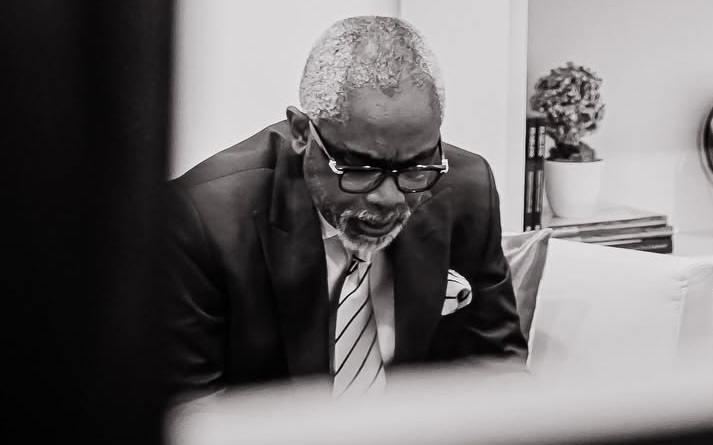
SHIELD OR SHADOW? Femi Gbajabiamila as Bola Tinubu’s emerging political liability
In the high-stakes theater of Nigerian politics, the role of the Chief of Staff (CoS) to the President is arguably the most sensitive. The occupant serves as the ultimate gatekeeper, the administrative engine room, and the lightning rod for controversies that would otherwise strike the Commander-in-Chief.
For President Bola Ahmed Tinubu, appointing Femi Gbajabiamila—the sophisticated former Speaker of the House of Representatives—was intended to bring legislative finesse and unflinching loyalty to the heart of the Villa.
However, as the administration navigates a landscape defined by painful economic reforms, a fresh wave of financial scandals surrounding the Chief of Staff has shifted public perception. Rather than acting as a political shield for the President, Gbajabiamila is increasingly viewed by critics, civil society, and opposition parties as a growing political liability to the Tinubu presidency.
Even before the major financial storms broke, Gbajabiamila’s tenure as Chief of Staff faced scrutiny. Villa insiders and political stakeholders frequently whispered about “access bottlenecks,” alleging that the former Speaker had built an impenetrable wall around the president, allegedly monetizing or heavily gatekeeping access to the oval office. There are also talks about alleged his monetization of political appointment in the Tinubu government.
READ ALSO: ‘PHANTOM’ N1.3BN COUNCIL: My life is under threat, Gbajabiamila’s accuser cries out from hiding
While grumblings about a Chief of Staff’s gatekeeping are normal in any administration, the narrative took a darker turn when whispers of influence-peddling evolved into public, structured allegations of high-level financial misconduct.
The most severe blow to Gbajabiamila’s political standing crystallized around the bizarre and deeply damaging Presidential Foreign Intervention Promotion Council (PFIPC) scandal.
The controversy erupted into public view following a explosive press conference by one Prince Adeniyi Adeyemi, who claimed to be the Director-General of the PFIPC—an agency the presidency vigorously disclaimed as “fictitious” and “illegal.” The allegations leveled by Adeyemi against the Chief of Staff were remarkably specific:
Adeyemi alleged that he secured his appointment through Gbajabiamila for , with already paid through proxies and outstanding. He further alleged that the fallout between himself and the CoS occurred because he rejected a demand to surrender 48% of the agency’s multi-billion-naira take-off grant.
The institutional conundrum
The presidency, via Special Adviser Bayo Onanuga, quickly pushed back, stating that Gbajabiamila himself had blown the whistle on Adeyemi back in October 2025 for forgery and impersonation. The official line remains that Adeyemi is a sophisticated fraudster who forged presidential signatures and letters to operate a phantom body.
Yet, the scandal has left behind institutional questions that the administration has struggled to put to rest. Critics, including the opposition Nigeria Democratic Congress (NDC), have asked how a supposedly “fictitious” agency managed to secure a line-item allocation in the federal budget; successfully
pass documentation checks to open multiple accounts, including a Treasury Single Account (TSA) and domiciliary accounts, at the Central Bank of Nigeria (CBN); and secure staff approvals for over 300 positions from the Office of the Head of the Civil Service.
Whether Gbajabiamila is the victim of an elaborate smear campaign by a master forger—as the Presidency contends—or a participant in a deeply entrenched system of institutional compromise, the optics have been devastating.
Why Gbajabiamila has become a liability to Tinubu
For an administration asking Nigerians to endure historic economic adjustments, including the removal of fuel subsidies and currency floating, the political currency of “integrity” is vital. Gbajabiamila’s continuous entanglement in financial controversies damages the president along several specific fault lines:
President Tinubu cannot afford the perception that his inner sanctum is a marketplace for federal appointments. When high-profile advocates and opposition parties openly call for the suspension and independent probe of the Chief of Staff, it creates a persistent media distraction that drowns out the administration’s policy achievements.
The PFIPC saga has handed the opposition a potent weapon. Former Vice President Atiku Abubakar and various civil society groups have seized upon the contradictions between the budget office, the CBN, and the presidency’s disclaimers. By leaving Gbajabiamila in office amidst these loud calls for independent probes, Tinubu risks looking permissive of corruption within his immediate circle.
A Chief of Staff must maintain good relationships with governors, lawmakers, and party stalwarts to build consensus. The persistent allegations of financial high-handedness and proxy deals have alienated parts of the All Progressives Congress (APC) coalition, making Gbajabiamila an internal target for party elites who feel excluded from the villa’s patronage networks.
In Nigerian governance, a president rarely drops an inner-circle loyalist easily; doing so can be interpreted as a sign of weakness or an admission of guilt. Supporters of Gbajabiamila rightly point out that he has over two decades of public service with an unblemished legislative record as Speaker, arguing that the recent attacks are simply a coordinated “campaign of calumny” aimed at destabilizing the Presidency.
“A Chief of Staff’s ultimate job is to absorb heat for the principal. But when the Chief of Staff becomes the fire, the principal risks getting burned.”
As criminal prosecutions against his accusers play out in the federal courts, the political damage remains live. If President Tinubu intends to regain absolute public trust and project an image of fiscal discipline and transparency, he must weigh his personal loyalty to Gbajabiamila against the heavy political cost of keeping a scandal-fatigued gatekeeper at the heart of Nigeria’s government.
