


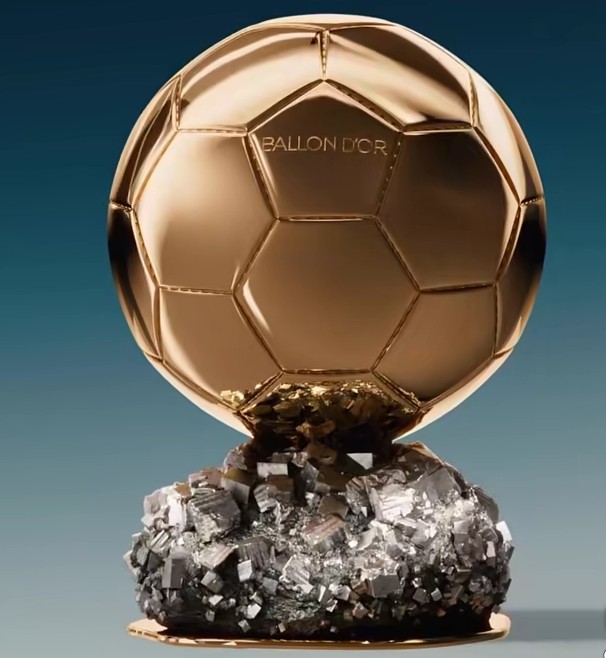
World Cup Heroics vs. Club Dominance: What truly matters to Ballon d’Or voters?
With the 2026 FIFA World Cup now officially in the history books, the global football community has once again turned its attention to the sport’s most prized individual honor: the Ballon d’Or.
As always, a familiar debate has resurfaced across fans’ forums, punditry desks, and social media platforms—is winning the World Cup a mandatory prerequisite to lifting the Ballon d’Or in a World Cup year?
A deep dive into historical data published by the official Ballon d’Or organizers reveals a surprising truth: while lifting football’s biggest trophy significantly boosts a player’s chances, it is far from a guaranteed ticket to individual glory.
The historic double
The correlation between World Cup triumphs and Ballon d’Or victories is well-documented in footballing lore. Legend Bobby Charlton established the precedent in 1966 after leading England to glory, a feat later matched by Italy’s Paolo Rossi in 1982 and Germany’s Lothar Matthäus in 1990.
However, the dynamics of the award shifted dramatically in 1995 when France Football expanded eligibility beyond European players to global stars playing in European leagues.
Initially, the post-1995 era reinforced the “World Cup rule”.
1998: Zinédine Zidane’s masterclass on home soil led France to the World Cup trophy, earning him the Ballon d’Or later that year.
2002: Brazil’s Ronaldo Nazário triumphed in Asia, claiming both the World Cup and the Ballon d’Or.
2006: Italian defensive titan Fabio Cannavaro captained the Azzurri to global victory and was rewarded with the individual crown.
At that point, three consecutive World Cup tournament years had produced three Ballon d’Or winners—a 100% conversion rate.
The paradigm shift
That unbroken trend came to a grinding halt in 2010.
Despite Spain winning their first-ever World Cup in South Africa, Barcelona’s Lionel Messi captured the 2010 Ballon d’Or over Spanish World Cup winners Andrés Iniesta and Xavi Hernández. Messi’s astonishing season-long club performances outweighed international tournament glory in the eyes of the voters.
A similar story unfolded in 2014. Portugal’s Cristiano Ronaldo won the Ballon d’Or following a stellar club season with Real Madrid, edging out World Cup finalist Lionel Messi and Germany’s World Cup-winning goalkeeper Manuel Neuer.
In 2018, Croatia’s Luka Modrić took home the trophy after leading his country to an unexpected World Cup final appearance, finishing ahead of Ronaldo and Antoine Griezmann—the highest-ranked French World Cup champion on the podium.
The pattern was only restored following the 2022 World Cup in Qatar, where Lionel Messi led Argentina to victory and subsequently claimed the 2023 Ballon d’Or.
The 57% success rate
Since the award went global in 1995, seven World Cup tournaments have taken place prior to 2026. Out of those seven editions, only four World Cup winners went on to lift the Ballon d’Or in the same cycle: Zidane (1998), Ronaldo (2002), Cannavaro (2006), and Messi (2022/2023).
That translates to a 57% success rate for World Cup champions since 1995.
What this means for 2026
The numbers deliver a clear message to the contenders of the newly concluded 2026 World Cup: performing exceptionally on international football’s biggest stage is crucial, but it is only part of the equation.
To claim the Ballon d’Or, a player must demonstrate brilliance across an entire season—balancing elite domestic and continental club achievements alongside their international exploits. As the voting period opens, the 2026 World Cup stars will find out whether global tournament glory is enough, or if season-long consistency will once again steal the spotlight.
