


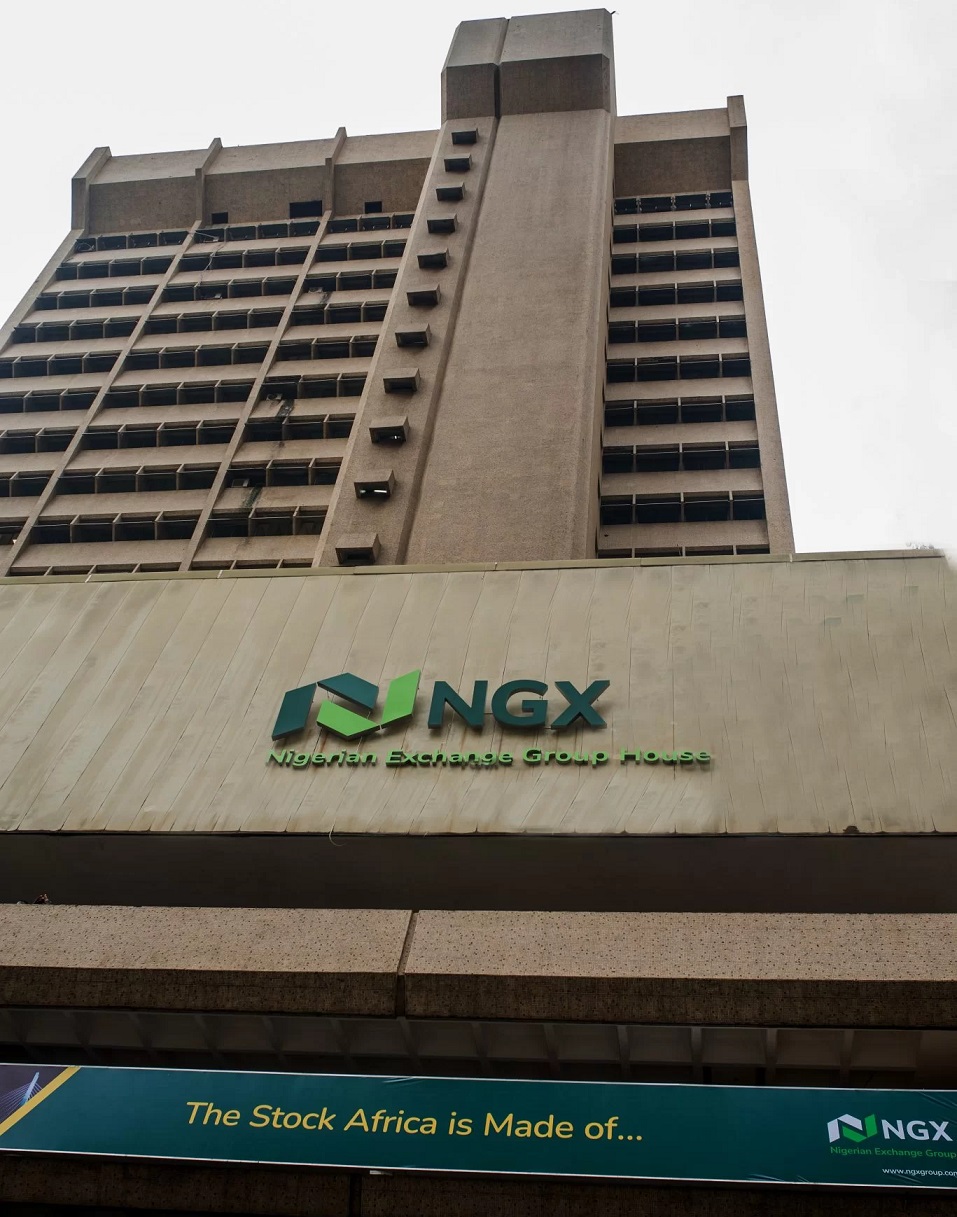
NGX overtakes South Korea as world’s best-performing stock market
Nigeria’s stock market has officially emerged as the world’s best-performing equity market in dollar terms this year, overtaking South Korea. The milestone comes as international and domestic investors increasingly reward the country’s improving macroeconomic outlook and ongoing structural reforms.
According to Bloomberg data tracking performance across 92 global stock exchanges, Nigeria’s benchmark equity index has delivered a staggering 67% return in U.S. dollar terms since the beginning of the year. This narrowly surpasses South Korea’s Kospi Index, which posted a 66% return over the same period.
Global Shift: Tech corrections vs. Nigerian resilience
The shift in global rankings highlights contrasting market dynamics.
South Korea’s tech slump. The Kospi Index has entered a technical bear market, plummeting 22% from its June 19 peak. This correction reflects mounting concerns over the sustainability of the global artificial intelligence (AI) and technology-driven rally. Furthermore, the South Korean won has depreciated by roughly 5% against the greenback, diminishing returns for offshore investors.
Conversely, the Nigerian Exchange (NGX) has been insulated from the global tech sell-off due to limited direct exposure to AI and technology sectors. Instead, the market has benefited from improved foreign exchange liquidity, firmer global oil prices, and sustained policy reforms.
READ ALSO: Bulls eye recovery as NGX slams brakes on weekly losses
Crucially, a 4% appreciation of the naira against the U.S. dollar since January has significantly boosted net dollar returns for international investors.
The banking and insurance sectors remain the primary engines of the local rally. Notably, Fortis Global Insurance Plc has emerged as a standout performer, generating an estimated 1,400% return in dollar terms this year.
S&P Dow Jones puts Nigeria on 2027 watchlist
Market sentiment received an additional boost following the decision by S&P Dow Jones Indices (S&P DJI) to place Nigeria on its 2027 watchlist for a potential upgrade from “Standalone” market status to “Frontier” market status.
The index provider credited Nigeria’s modernized regulatory framework, improved transparency, strict enforcement, and enhanced market integrity as key catalysts for the review.
The market responded robustly on July 8, 2026, with the NGX All-Share Index gaining 2.27% to close at 242,459.98 points, up from 237,083.28 points.
Market capitalization increased by ₦3.45 trillion to settle at ₦155.59 trillion.
Top mover Airtel Africa spearheaded the daily rally, gaining the maximum permissible 10% to close at ₦5,801.40.
Meanwhile, year-to-date return rebounded sharply to 55.81%, wiping out losses from the market correction seen earlier in June.
Regulators react
Commenting on the global recognition, stakeholders emphasized that the S&P DJI watchlist inclusion validates ongoing efforts by the Securities and Exchange Commission (SEC), NGX Group, and the Central Securities Clearing System (CSCS).
“While this is not yet an immediate reclassification, it is an important validation of the progress being made. Our priority remains to sustain the momentum by deepening liquidity and improving market accessibility, ” says Temi Popoola, Group Managing Director/CEO of NGX Group
Similarly, the Director-General of the SEC, Dr. Emomotimi Agama, reiterated the Commission’s commitment to building a forward-looking, world-class market infrastructure.
“At SEC, our priority is to sustain a fair, orderly, and transparent market that protects investors and supports long-term capital formation,” Agama stated. He noted that ongoing reforms are heavily focused on faster settlement systems, tokenized securities, and deeper derivatives markets.
‘Nothing to celebrate yet’ — Market analyst urges caution
Despite the global accolades, some local market participants urge a more grounded perspective, pointing out that headline index growth has yet to trickle down to the wider economy.
Speaking on the development, market analyst and investor Adeleke Adebayo cautioned against premature celebrations, reminding stakeholders that over ₦13 trillion was wiped off the NGX market capitalization just last month.
“For me, our capital market has been in doldrums over the past few weeks. We lost close to 12% to 25% of market capitalization, and there’s just a little reversal this week and we’re excited about it,” Adebayo observed.
He questioned the relevance of comparing Nigeria to South Korea when broader socioeconomic indicators tell a different story:
| Economic Indicator | Nigeria vs. South Korea |
| Consumer Price Index (CPI) | Higher inflationary pressures domestically |
| Gross Domestic Product (GDP) | South Korea maintains a significantly higher GDP per capita |
| Life Expectancy & Security | Severe disparities remain between both nations |
“What joy do we have for overtaking South Korea or the U.S. if it is not translating to measurable or tangible results for us in the country?” Adebayo argued. “I am not bothered unless it becomes evident that this development translates to what is going to affect the life of ordinary Nigerians or help local businesses grow.”
